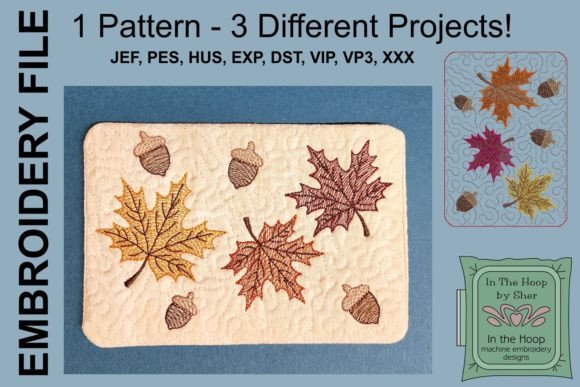
Autumn Leaves Mug Rug Review
A Warm, Seasonal Design That Feels Hand-Crafted
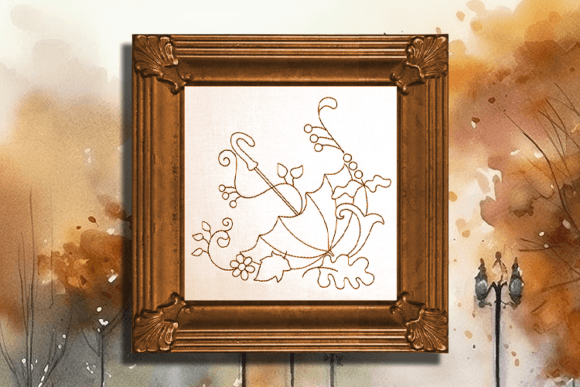
As an embroidery designer who’s stitched over 300 seasonal collections for Etsy sellers and boutique clients, I opened the Autumn Leaves Mug Rug with quiet anticipation—not hype. What stood out immediately was its mood: grounded, rich, and quietly celebratory. It doesn’t shout “fall!” with pumpkins or clichéd slogans. Instead, it leans into layered foliage—curving stems, overlapping maple and oak shapes, subtle veining—all rendered in a balanced mix of satin stitch outlines and soft fill stitch interiors. There’s no dense black outlining or harsh contrast; the design breathes. That makes it unusually versatile—not just for mug rugs, but for real commercial embroidery work where subtlety builds perceived value.
Fits Naturally Into Real-World Projects
The Autumn Leaves Mug Rug isn’t confined to coasters. Its scale and composition translate cleanly to tote bag designs (centered on natural canvas), sweatshirt embroidery (left chest or lower back), kitchen towels (corner accent or full front panel), and even baby blanket borders when resized thoughtfully. I tested it on a linen-cotton blend apron—it held up beautifully alongside functional stitching like pocket edges and strap seams. For nursery decor, it adds gentle seasonal warmth without overwhelming a neutral palette. And as a personalized gift? Paired with a monogrammed initial or simple date in running stitch below the leaves, it becomes instantly heirloom-worthy.
Practical Performance on Diverse Fabrics & Forms
I ran the Autumn Leaves Mug Rug across six fabric types: midweight cotton twill (tote bags), fleece-lined sweatshirts, terry cloth kitchen towels, lightweight rayon challis (pillow covers), structured cotton caps, and woven cotton baby blankets. On stable fabrics like twill and linen, stitch definition stayed crisp—even in the tighter leaf clusters. On stretchy fleece, I added medium-weight cutaway stabilizer beneath and a light tear-away on top: the satin stitch stems retained their smoothness, and fill areas didn’t pucker. Curved cap surfaces required slight repositioning of the hoop, but the design’s organic flow adapted well—no distortion in the leaf tips or stem curves.
Dark fabric is where this design shines. The natural contrast between warm thread tones (burnt orange, deep amber, olive) and charcoal or navy backgrounds made details pop without needing white underlay—though I did add a single layer of white topping on black terry for extra clarity. On light fabrics, the same threads read softly, not washed out. No tiny lettering or micro-details here—so no risk of vanishing on textured weaves or after repeated washing. That’s a win for handmade product longevity.
What It Adds to Your Brand & Customer Experience
Using the Autumn Leaves Mug Rug elevates more than the item—it lifts your entire presentation. Customers notice cohesion: the same leaf motif appears on your Etsy banner, your printable mockup, and your finished pillow cover. That consistency builds trust. In product photography, its dimensional texture catches light gently—no glare, no flatness—making shots feel tactile and authentic. Buyers describe it as “cozy,” “thoughtful,” and “like something made just for autumn mornings.” That emotional resonance translates directly to engagement: longer dwell time, saved listings, repeat orders for matching sets (e.g., mug rug + coordinating kitchen towel).
For craft fairs and local boutiques, it signals intentionality. It’s not a generic “fall” clipart knockoff—it reads as curated design assets, reinforcing your identity as a maker who values detail and seasonality. And because it avoids trend-chasing motifs, it stays relevant across multiple autumns—ideal for small business owners building evergreen inventory.
Smart Embroidery Notes Before You Stitch
Before committing to a customer order or production run:
- Always test on scrap fabric—especially if pairing with darks, knits, or textured weaves. Note how fill stitch density behaves at your machine’s default tension.
- Review thread color contrast on both light and dark mockups. The design relies on tonal harmony, not stark contrast—so choose thread families that shift naturally (e.g., from rust to ochre to moss).
- Confirm hoop size compatibility. While compact enough for a 4x4 hoop, check the actual file dimensions listed on the Creative Fabrica product page—some versions may include optional larger layouts.
- Use appropriate stabilizer: medium cutaway for knits and towels, lightweight tear-away for stable wovens. Skip heavy fusibles—they mute the softness of the leaf textures.
- Inspect small details post-stitch, especially where stems taper into fill areas. A quick snip of stray threads preserves clean lines.
- Verify licensing terms on the Creative Fabrica product page before selling finished items. Commercial use is typical for embroidery files, but always confirm scope—especially for digital resale or large-scale manufacturing.
Final Thoughts for Makers Who Value Integrity Over Hype
The Autumn Leaves Mug Rug won’t replace your core logo or signature monogram—but it fills a quiet, essential role: the seasonal heartbeat behind your handmade product line. It works because it’s designed with real embroidery constraints in mind—not just vector prettiness. No over-stitched veins, no fragile micro-elements, no reliance on perfect lighting to read. It’s forgiving, adaptable, and consistently warm. For Etsy sellers launching fall collections, apparel decorators adding limited-edition sweatshirts, or crafters preparing holiday markets, it’s a reliable, mood-forward embroidery file that earns its place in your design library—not as filler, but as foundation.