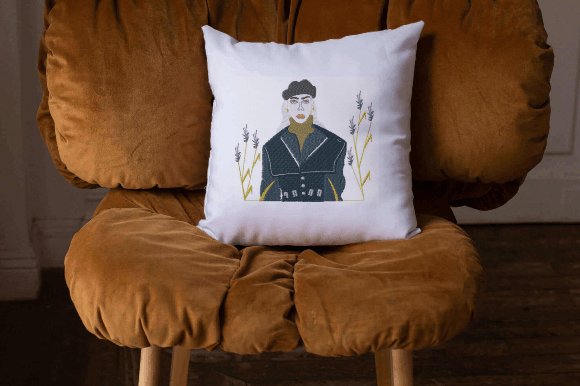
Reeds: A Craft Fair-Ready Embroidery Design
First Impression: Rustic Elegance with Quiet Confidence
Opening the Reeds embroidery file, I immediately sense a grounded, organic calm—neither loud nor fussy, but deeply intentional. The name “Reeds” evokes slender vertical lines, soft movement, and natural texture: think riverbanks at dawn, woven baskets, or linen napkins folded beside ceramic mugs. It reads as rustic elegance—not farmhouse cliché, not minimalist austerity—but something quietly premium, tactile, and handmade in spirit. That’s gold at a craft fair, where shoppers pause for pieces that feel both familiar and thoughtfully distinct.
Where Reeds Shines on Real Craft Fair Products
Reeds isn’t a one-size-fits-all motif—it thrives where subtlety meets substance. On a heavyweight canvas tote bag, it anchors beautifully near the bottom corner or centered low on the front panel: visible without shouting, elegant without stiffness. As apron embroidery, it works perfectly above the pocket or along the waistband—clean, vertical, and aligned with the wearer’s posture. For tea towel embroidery, Reeds gains quiet charm when stitched just below the hanging loop, letting the fabric’s texture breathe around the design.
It also excels as an embroidered patch—ideal for attaching to denim jackets, market bags, or small pouches. Because of its linear, open structure, Reeds scales well: large enough to read clearly at 3.5", yet refined enough to hold detail at 2". On pillow covers and fabric pouches, it adds artisanal polish without overwhelming the form. And yes—it photographs exceptionally well for Etsy listings and printable mockups: clean lines, balanced negative space, and inherent texture translate reliably across screens and booth displays.
What Makes Reeds a Smart Sell for Small Shops & Etsy Sellers
Reeds feels repeatable—not in a mass-produced way, but in a cohesive-brand way. If you sell botanical-themed kitchen goods or slow-living accessories, Reeds reinforces your aesthetic across product categories without needing variation. Customers notice consistency: same delicate rhythm on a tea towel, same graceful line on a cap brim, same understated presence on a linen pouch. That builds trust—and repeat buyers.
At the booth, Reeds stands out because it doesn’t compete with noise. While flashier designs get glanced at and forgotten, Reeds invites closer looking. A shopper might tilt her head, trace the shape with her eyes, then pick up the tote bag to feel the stitch density and fabric texture. That moment of engagement is where handmade value crystallizes.
Practical Production Notes Every Embroidery Designer Should Check
- Test on scrap fabric first—especially if using textured towels or thick canvas. Reeds’ flowing lines may behave differently on terry cloth versus smooth linen.
- Review thread contrast carefully. On dark fabric, lighter thread (ecru, oat, or pale sage) will highlight Reeds’ form; on light fabric, charcoal or deep olive adds sophistication without harshness.
- Confirm hoop size and stabilizer needs. Though the description mentions “meticulous” creation, dense stitch areas—especially where reed stems converge—may require medium-weight cutaway stabilizer for stability on knits or stretchy blends.
- Inspect spacing and clarity at smaller sizes. Tiny details or fine tapering may blur below 1.75". Avoid shrinking Reeds too far for cap fronts or tiny patches unless you’ve verified legibility on curved surfaces.
- Create at least one real mockup before batch production. A stitched tea towel or pouch tells you more than any digital preview about how Reeds interacts with drape, light, and hand-feel.
- Compare fabric colors side-by-side. Reeds’ organic mood shifts dramatically on cream vs. oat vs. heather grey—choose intentionally, not by default.
- Verify commercial licensing. Since Reeds is marketed as a digital embroidery file for creative entrepreneurs, confirm with Creative Fabrica that your intended use—embroidered tote bags, branded aprons, or wholesale pouches—falls within permitted commercial embroidery terms.
Careful-Use Considerations for Maximum Clarity
Reeds leans into natural form, which means some areas may carry higher stitch density where stems overlap or taper to fine points. That’s beautiful—but it demands attention on textured towels, curved cap surfaces, or dark fabrics where thread blending can mute definition. Avoid placing Reeds directly over seams or heavy folds unless you’ve tested wash-and-wear durability. Also, skip ultra-fine lettering integrations unless explicitly included—the design’s strength lies in its wordless, visual language.
Why Reeds Strengthens Your Booth & Brand
In a sea of glitter, florals, and slogans, Reeds offers breathing room. It signals intentionality—not just “I made this,” but “I chose this, for this reason.” That resonates with discerning craft fair shoppers who invest in handmade products for meaning as much as utility. When grouped with complementary items—a Reeds-embroidered tea towel beside a matching linen pouch and ceramic mug—you’re not selling isolated objects. You’re offering a curated moment of calm. That cohesion lifts perceived value, supports higher price points, and makes your booth memorable long after the event ends.
Final Thought: Reeds Is Ready—If You Are
Reeds isn’t a trend-chasing design. It’s a thoughtful, versatile embroidery file built for longevity—across seasons, product types, and customer expectations. As an accessories-focused embroidery design, it bridges function and feeling seamlessly. Whether you’re prepping for your next craft fair, updating your Etsy shop, or expanding your small shop product line, Reeds earns its place not through novelty, but through quiet, confident craftsmanship. Just remember: test, compare, stabilize, and license. Then let Reeds do what it does best—speak softly, stand tall, and sell.