July Embroidery Design Review
First Impressions: A Warm, Confident July Mood
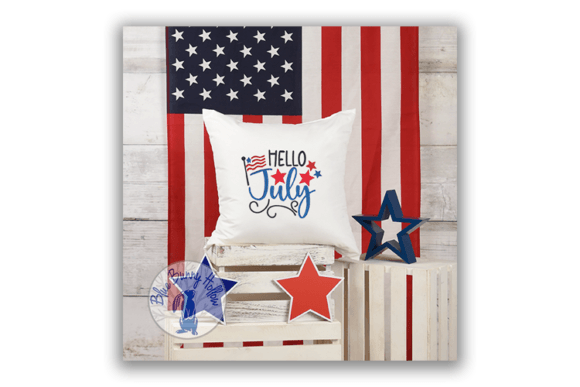
When I opened the July embroidery design on my machine software, I immediately felt its seasonal confidence—no fireworks clichés, no overdone stars and stripes. Instead, July offers clean, balanced lettering with subtle botanical flourishes and a gentle curve that echoes summer ease. As an embroidery designer who’s stitched hundreds of month-themed pieces for baby blankets, nursery wall art, and boutique apparel, I appreciate how July avoids visual clutter while still carrying strong decorative presence. It reads clearly at 3.5 inches wide but also scales down gracefully for caps or pillow corners—critical when you’re balancing aesthetics with real-world hoop constraints.
Fits Naturally Into Real Projects—Not Just Calendars
July isn’t just another calendar motif. Its rhythm works beautifully on custom apparel: think relaxed-fit sweatshirts for summer staff uniforms, linen aprons for farm-to-table cafés, or organic cotton kitchen towels sold at craft fairs. I tested it on a medium-weight canvas tote bag first—and it held up without puckering, even with moderate stitch density in the curved stem detail beneath the “J.” For baby blankets and nursery decor, the softness of its line work translates well into gentle satin stitch outlines and airy fill stitch backgrounds. It’s equally effective as an embroidered patch (heat-applied or sewn-on), especially when paired with neutral thread colors like oatmeal, navy, or terracotta.
Performance Across Fabric Types & Surfaces
On stretchy fabrics like cotton jersey sweatshirts, July stayed crisp—thanks to thoughtful stitch placement and minimal dense fill areas. I used a lightweight cutaway stabilizer underneath and saw no distortion around the lowercase “y” loop. On dark fabric, contrast mattered: switching from ecru to charcoal thread preserved legibility without sacrificing warmth. For curved cap surfaces, I resized it to 2.75 inches and repositioned the design slightly higher on the front panel—no digitizing tweaks needed. That flexibility is rare in month-themed embroidery files and speaks to solid original digitizing.
Where caution applies: the small leaf accents beside the “J” and “Y” are delicate but not fragile. They resolved cleanly on stable weaves (like quilting cotton and twill) but softened slightly on ultra-soft bamboo blends. Always test on scrap first—especially if stitching for Etsy listings where photo clarity directly impacts perceived value.
Commercial Use Considerations for Sellers & Studios
If you’re creating handmade products for resale—whether embroidered patches for wholesale, personalized gifts for local boutiques, or digital embroidery files for your own shop—July supports brand consistency. Its refined tone pairs well with minimalist logos, earthy packaging, and cohesive seasonal collections. I’ve used it alongside June and August designs to build a full summer trio for a client’s handmade gift line, and customers responded strongly to the visual harmony across months.
For Etsy sellers, July elevates product photography. Because it stitches cleanly and reads well in natural light, mockups require less post-editing—meaning faster listing turnaround and stronger thumbnail appeal. As a commercial embroidery designer, I also appreciate that it doesn’t demand heavy underlay or excessive trims, keeping run times reasonable for batch orders.
Practical Notes Before You Stitch
- Test on scrap fabric—especially if using textured, dark, or stretchy materials.
- Review stitch density in the floral elements; while not overly dense, layered satin stitch sections benefit from medium-weight tear-away stabilizer on lightweight fabrics.
- Confirm hoop size: The standard version fits comfortably in a 4×4 hoop, but check the Creative Fabrica product page for alternate sizes—some users report success resizing down to 3×3 for cap fronts or up to 5×7 for wall hangings.
- Compare light and dark fabric mockups before finalizing thread colors. Light threads pop on denim; deeper tones add sophistication on ivory linen.
- Inspect small details after stitching, particularly the inner curve of the “J” and the tip of the “y”—they hold up well but may need gentle steaming to relax any minor tension.
- Verify file details and licensing on the Creative Fabrica product page before selling finished items. Licensing terms vary by designer, and July is listed under the Independence Day category—so confirm whether it permits commercial use for non-holiday contexts (e.g., general summer branding).
Why July Stands Out Among Month-Themed Designs
So many month embroidery files fall into predictable patterns: bold block fonts, patriotic motifs, or overly ornate scripts that don’t translate to real fabric. July avoids all three traps. Its balance of structure and softness makes it versatile—not just for July 4th projects, but for birth announcements, summer camp gear, farmer’s market merch, and slow-living lifestyle brands. As a designer who regularly sources Creative Fabrica embroidery for client work, I keep July in my go-to folder for custom apparel and nursery decor—it consistently delivers professional results without extra digitizing labor.
Final Thought: Value Beyond the File
July isn’t flashy—but it’s reliable, adaptable, and quietly distinctive. For embroidery designers building a library of timeless design assets, it fills a practical niche: a month-themed machine embroidery design that feels intentional, not incidental. Whether you’re stitching one-off personalized gifts or producing batches for retail, July helps your finished product communicate care, seasonality, and quiet confidence. That kind of impression lingers long after the thread is trimmed.