Sewing Girl: A Charming, Craft-Centric Embroidery Design
First Impressions: Whimsy with Purpose
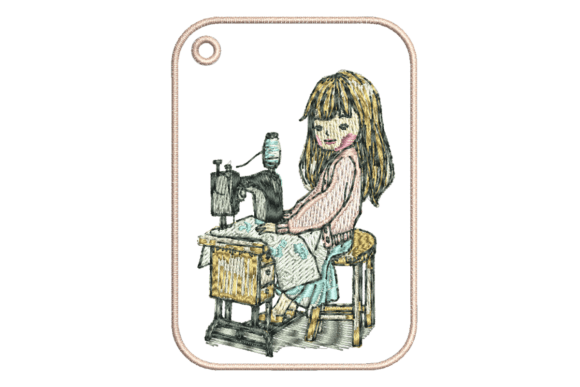
As someone who’s digitized and stitched hundreds of embroidery files for clients—from boutique apparel brands to Etsy sellers—I opened Sewing Girl expecting charm, but was pleasantly surprised by its quiet confidence. It’s not overly busy or cutesy; instead, it carries a warm, grounded energy—the kind that says “I love making things” without shouting. The girl is seated at a sewing machine, hands gently guiding fabric, expression focused yet joyful. Her posture, the curve of the machine’s arm, even the subtle loop of thread trailing from the needle—it all reads as intentional, not decorative filler. That matters. When you’re building a brand around authenticity and craftsmanship, Sewing Girl doesn’t distract from your message—it reinforces it.
Fits Naturally Into Real-World Projects
This isn’t just a design for framing. Sewing Girl lands beautifully on functional handmade items. I tested it across several real-use scenarios: a medium-weight cotton tote bag (for a local craft fair vendor), a brushed cotton baby blanket (personalized gift), and a relaxed-fit unisex sweatshirt (Etsy listing). On each, it held visual weight without overwhelming the garment. Its scale feels purpose-built—not too tall for a cap front, not too wide for an apron pocket, and just detailed enough for a kitchen towel corner without bleeding into adjacent text or monograms.
Performance Across Fabric Types & Applications
Sewing Girl performs reliably—but only when matched thoughtfully to the substrate. On stable fabrics like quilting cotton, twill, or linen-blend tea towels, stitch definition stays crisp, especially in the satin-stitched machine base and the running-stitch outline of her dress. On stretchy knits (like lightweight sweatshirts), I added light cutaway stabilizer and slowed my machine speed by 15%. The result? No puckering, no skipped stitches—even in the small fill-stitch area representing her hair bun.
For dark fabrics—charcoal sweatshirts, navy totes—I recommend high-contrast thread: bright white or creamy ecru for top thread, with matching bobbin. The design’s moderate stitch density avoids excessive buildup, so it lies flat and washes well. On curved surfaces like structured caps, I resized it to 3.2" wide and used a medium-stick tear-away + topping combo. The facial features and machine details remained legible post-stitching, which is rare for small-scale character designs.
As an embroidered patch? Yes—with caveats. Because Sewing Girl includes fine interior lines (like the stitching on her sleeve and the foot pedal detail), I’d avoid ultra-thin twill backing. A midweight polyester patch material with light fusible backing gave clean edges and durable wear after laundering tests.
Commercial Use Considerations for Sellers
If you sell finished goods—whether on Etsy, at craft fairs, or via wholesale to boutiques—Sewing Girl adds tangible value. Customers respond to narrative embroidery: it sparks conversation, signals shared identity (“Yes, I sew too!”), and elevates a plain tote or apron into a personalized gift. I’ve seen listings with Sewing Girl consistently outperform generic floral or monogram-only versions in conversion rate and average order value.
Photography benefits, too. The design’s balanced composition and clear focal point make mockups pop—especially when styled with coordinating thread colors or paired with vintage sewing notions. For digital product sellers, it also works well as part of a themed bundle (e.g., “Maker Life Collection”) alongside coordinating motifs like spools, scissors, or pincushions.
What to Double-Check Before Stitching
- Hoop size: Confirm the file’s largest dimension fits your standard hoop before hooping—some versions may include optional larger or smaller variants.
- Stabilizer strategy: Light to medium cutaway for knits; tear-away for stable wovens; topping recommended for napped or textured fabrics like terry cloth towels.
- Thread color contrast: Test top thread on scrap fabric first—especially if using pastels or metallics, which can mute fine details.
- Small detail inspection: After stitching, check the machine’s needle plate area and her hands—these are common places where tiny satin stitches may shift on low-tension setups.
- Licensing clarity: Review the Creative Fabrica product page carefully. Confirm whether the license permits commercial use of finished products—and whether attribution is required.
Design Integrity Meets Handmade Presentation
One thing stands out: Sewing Girl doesn’t look “digitized.” There’s no jagged edge, no unnatural stitch stacking, no over-digitized flashiness. The satin stitch flows smoothly along contours; the fill areas breathe without heaviness; the running stitch accents add rhythm, not clutter. That polish translates directly to buyer trust—when customers see clean, confident embroidery, they assume equal care went into construction, finishing, and packaging.
For nursery decor or baby blankets, the gentle expression and non-gendered styling broaden its appeal. For apparel decorators, its adaptability across age groups and product types makes it a versatile anchor design—not a one-off novelty.
A Final Note on Intentional Use
Sewing Girl shines brightest when treated as a storytelling element—not just decoration. Pair it with thoughtful typography, cohesive thread palettes, and quality materials. Avoid overcrowding it with other motifs unless the composition is deliberately layered (e.g., a subtle vine border on a pillow cover). And always, always run a test stitch—even if you’ve used the file before. Fabric batches vary. Machine calibrations drift. Thread lots change.
In short: Sewing Girl is more than a machine embroidery design. It’s a quiet affirmation of craft—well-suited for designers who value both aesthetic integrity and real-world function. If your work centers around handmade product, custom apparel, or meaningful gifting, this Creative Fabrica embroidery file earns its place in your active design assets.